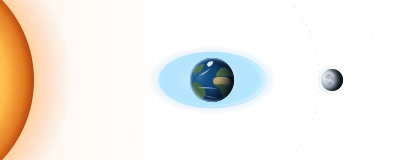
A lunar month, new Moon to new Moon, lasts 29.53 days on average. Today is day 19 of this cycle: a waning gibbous, 84% lit. This cycle lasts 29 days 18 hours, until the new Moon on Wed 9 Dec.
Day 19 of 30Fri 27 Nov · todayWaning Gibbous · 88% lit
The stages of the lunar cycle, in order
The cycle runs through eight named stages: new Moon, waxing crescent, first quarter, waxing gibbous, full Moon, waning gibbous, last quarter and waning crescent. The four main phases are single moments, each giving its name to one day; the four between them take about a week each. The bars show this cycle's real lengths.
New Moon1 day · 9 Nov
Waxing Crescent7 days · 10–16 Nov
First Quarter1 day · 17 Nov
Waxing Gibbous6 days · 18–23 Nov
Full Moon1 day · 24 Nov
Waning Gibbous6 days · 25–30 Nov
Last Quarter1 day · 1 Dec
Waning Crescent7 days · 2–8 Dec
Is the lunar cycle 28 days?
Phases (synodic)29.53 d
Orbit (sidereal)27.32 d
Calendar month30.44 d
Close, but no: the phases repeat every 29.53 days, so a cycle has 29 or 30 days on the calendar. The Moon goes round Earth in 27.32 days, but Earth moves on round the Sun meanwhile, so the Moon needs about two more days to line up with the Sun again. “28 days” is a round number between the two.
The lunar year: 12 or 13 lunar months
12 lunar months354 d
Calendar year365 d
Twelve lunar months make a lunar year of 354 days, 11 days short of the calendar year. The gap adds up, so about every third year fits 13 full Moons: 2026 has 13. Lunar calendars such as the Chinese and Hebrew add a 13th month to keep in step with the seasons.
How does the lunar cycle affect tides?
New and full Moon: Sun and Moon in line, spring tides
Twice each cycle the Sun and Moon pull in line, at new and full Moon, and give the biggest tides, spring tides; at the quarters they pull at right angles and give the smallest, neap tides. Spring and neap tide dates.
Each cycle starts at a new Moon (UK dates); the bar shows its length between 29 days 3 hours and 29 days 23 hours, and the full Moon it holds. Lengths change because the Moon's orbit is an ellipse: a cycle whose new Moon falls near the Moon's closest point runs short. Moon calendar.
Lunar months in 2026
From 29 days 7 hours to 29 days 20 hours: each row is one cycle, with its full Moon against the halfway mark.
day 13day 14day 15day 16
18 JanSnow Moon · 14d 2h29d 16h
17 FebWorm Moon · 14d 0h29d 13h
19 MarPink Moon · 14d 1h29d 10h
17 AprFlower Moon · 14d 6h29d 8h
16 MayBlue Moon · 14d 13h29d 7h
15 JunStrawberry Moon · 14d 21h29d 7hshortest
14 JulBuck Moon · 15d 5h29d 8h
12 AugSturgeon Moon · 15d 11h29d 10h
11 SeptHarvest Moon · 15d 13h29d 12h
10 OctHunter's Moon · 15d 12h29d 15h
9 NovBeaver Moon · 15d 8h29d 18h
9 DecCold Moon · 15d 1h29d 20hlongest
Moon cycle meaning
New Moonintention: set a plan, start freshFirst quarteraction: push through the first obstaclesFull Moonculmination: finish, celebrate, let goLast quarterrelease and rest: clear out, reflect
In Moon lore the cycle is a month-long rhythm of growing and letting go: the waxing half for building, the waning half for finishing and rest. Waxing or waning: the meaning.